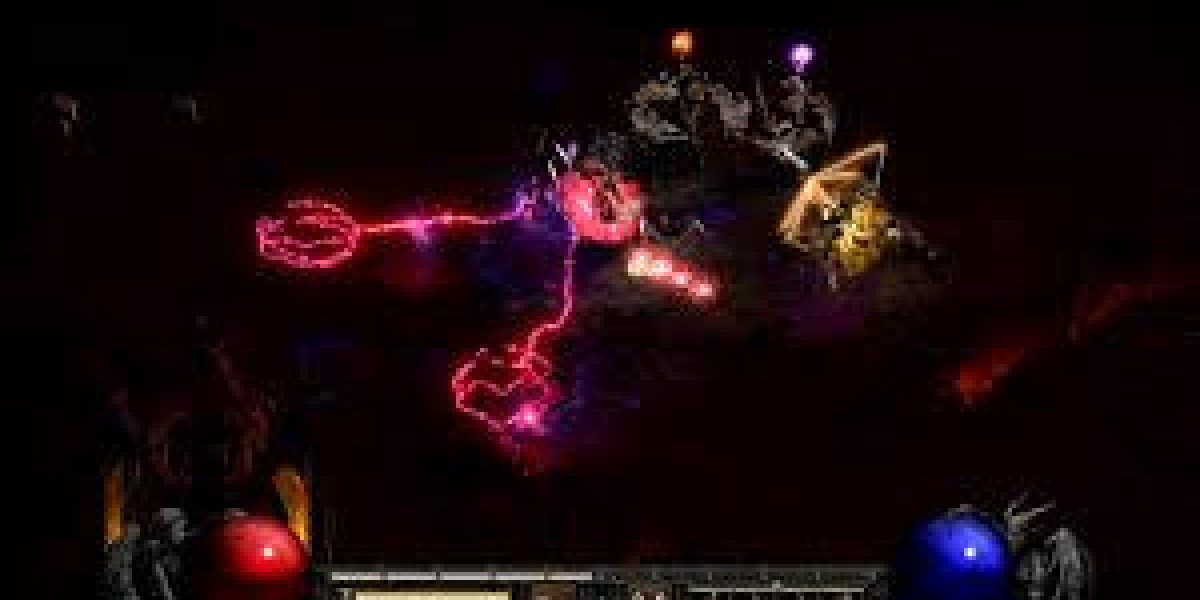

In the dark, demon-infested world of Sanctuary, survival depends on more than quick reflexes and powerful spells. It depends on community. Long before modern action RPGs introduced automated auction houses or bound-on-pickup items, the original Diablo 2 thrived on a player-driven economy built around one essential activity: Trading. With the arrival of Diablo 2: Resurrected, this vibrant, chaotic, and deeply rewarding system has been faithfully restored, proving that Trading remains the lifeblood of the game.
Trading in Diablo 2: Resurrected is not a convenience feature. It is a core mechanic that shapes how players approach every moment of gameplay. When a Harlequin Crest Shako drops, a Sorceress might celebrate, but a Barbarian sees currency. When a perfect 5% resist all small charm appears, a Necromancer knows its trade value far exceeds its personal use. This mindset transforms the entire game into a market economy. Every monster slain, every chest opened, and every cow leveled carries the potential for trade goods. Unlike modern loot systems that shower players with class-specific gear, Diablo 2: Resurrected drops items that anyone can use or barter.
The remaster has improved Trading without destroying its soul. The addition of a shared stash allows players to easily move items between their own characters, eliminating the need for third-party mule accounts or trusting strangers to hold your gear. Controller support and quick casting make combat smoother, but the game wisely stopped short of adding a global auction house. Why? Because Trading is meant to be social. Finding a game titled “O Ber 4 Jah” or “Shako 4 Vex” and entering to negotiate is a ritual. You inspect the other player’s gear. You haggle. You drop items on the ground and pray neither party is a scammer. This tension is authentic.
The economy of Diablo 2: Resurrected revolves around several de facto currencies. High Runes such as Ist, Gul, Vex, Ohm, Lo, Sur, Ber, Jah, and Cham serve as the primary medium of exchange. Perfect gems, particularly Perfect Amethysts and Perfect Skulls, act as smaller denominations. Unique items like Stone of Jordan rings and Tal Rasha’s armor pieces hold stable value. Learning these values requires experience. New players might trade a valuable 40% enhanced damage jewel for a handful of low runes. Veterans know that a 15% increased attack speed with 40% enhanced damage jewel is worth multiple High Runes. This knowledge gap creates a living, learning economy.
Trading also extends the lifespan of Diablo 2: Resurrected indefinitely. After you have killed Baal on Hell difficulty with one character, you begin gearing the next. Rather than farming every item yourself, which could take years, you trade for what you need. Your summon Necromancer’s unwanted Death’s Web wand becomes a Wind Druid’s dream. Your extra Griffon’s Eye diadem funds an Enigma runeword for your Paladin. This interdependence keeps every class relevant and every player engaged.
In an age of battle passes and cash shops, diablo2 resurrected reminds us that the best virtual economies are built by players, not developers. Trading is not a distraction from the grind. It is the grind. And it is magical.