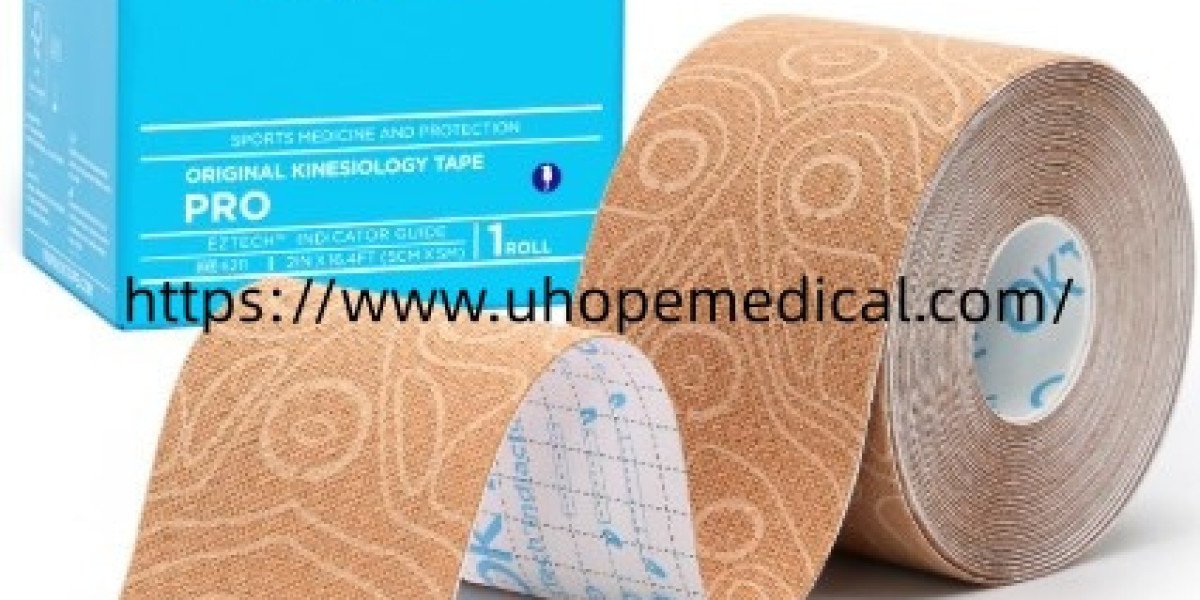

Kinesiology Tape With OEM Logo is widely used in sports support, rehabilitation assistance, and daily physical activity applications, where material selection plays an important role in product comfort and performance. In OEM manufacturing, material decisions influence elasticity, adhesion stability, skin compatibility, and durability. Before production begins, manufacturers and brand owners usually evaluate fabric type, adhesive formulation, and backing structure to ensure the product matches intended usage scenarios.
One of the most commonly used materials is cotton fabric. Cotton provides a soft texture and allows airflow, making it suitable for extended skin contact. It is often chosen for general sports applications and physical therapy environments where comfort is a priority. Cotton-based tape typically offers balanced elasticity when combined with elastic fibers, allowing it to follow body movement more naturally.
Another widely used material is synthetic fiber, such as polyester blends. These materials are selected for their stability and resistance to stretching deformation over time. Polyester-based fabrics are often used in environments where repeated movement and moisture exposure occur, such as fitness training or outdoor sports activities. The structure of synthetic fibers also allows for consistent printing quality when applying custom branding elements.
Elastic components, commonly known as spandex or elastane, are also important in production. These fibers are usually blended with cotton or polyester to provide controlled stretchability. The inclusion of elastic materials allows the tape to support muscle movement without restricting flexibility. This balance between support and mobility is an essential consideration during product development.
Adhesive materials are another key factor in OEM manufacturing. Medical-grade acrylic adhesive is frequently used due to its skin-friendly properties and stable bonding performance. This type of adhesive is designed to maintain adhesion during movement while allowing for safe removal without leaving residue. The formulation must be carefully controlled to ensure consistency across different production batches.
Backing paper and protective layers are also part of the material system. These layers protect the adhesive surface before application and help maintain product integrity during packaging and transportation. Depending on production requirements, manufacturers may select silicone-coated release paper or similar materials that support easy handling during use.
Printing materials used for logo customization must also be considered. OEM branding often requires inks that maintain clarity and adhesion without affecting the elasticity of the fabric. The printing process must be compatible with the base material to avoid cracking or fading during stretching and use.
In OEM production planning, material selection is influenced by target markets, usage environment, and regulatory requirements. For example, sports brands may prioritize elasticity and visual design, while rehabilitation suppliers may focus more on skin compatibility and long-term wear comfort. Testing samples before mass production is a common practice to ensure material performance aligns with expectations.
Manufacturing consistency is another important aspect. Stable material sourcing helps maintain uniform product quality across different production batches. Suppliers often work with verified material providers to reduce variation and improve production reliability. Communication between brand owners and manufacturers plays a key role in final product outcomes.
Zhusi focuses on providing OEM sports support solutions with attention to material selection and production control. The company works with various fabric and adhesive combinations to support different branding and application requirements. During the customization process, customers can evaluate material samples and discuss product specifications to match their intended use cases.
Selecting suitable materials for sports tape production is not only a technical decision but also a functional one. It involves balancing comfort, durability, flexibility, and branding requirements. Careful evaluation of each material component helps ensure the final product meets practical application needs across sports, fitness, and rehabilitation scenarios. For more information about OEM customization options, please visit https://www.uhopemedical.com/