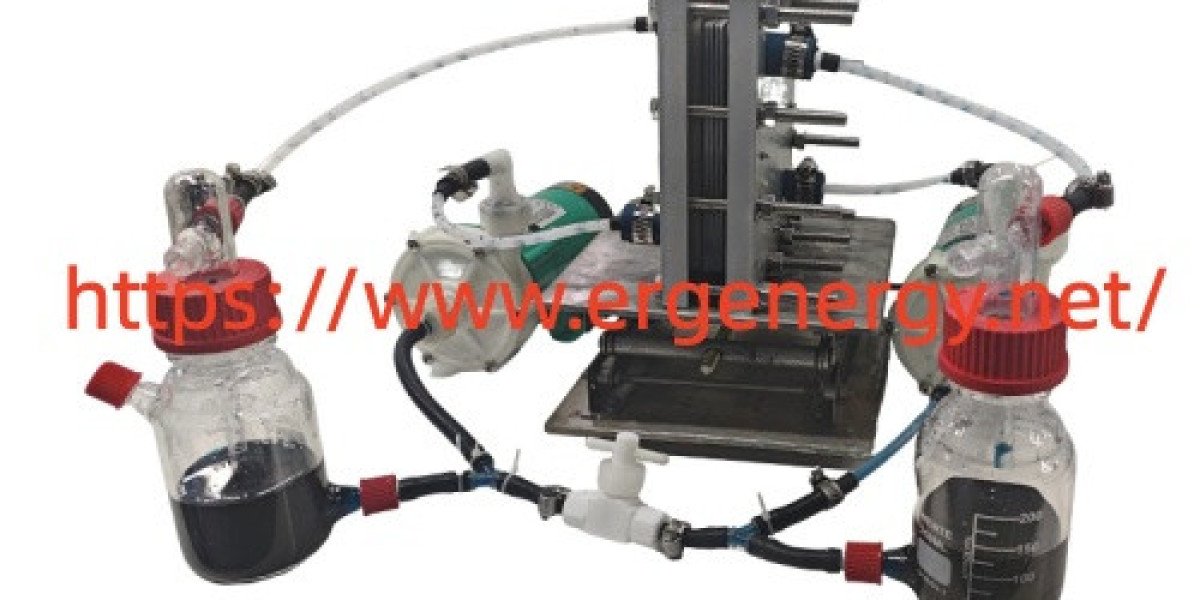

Laboratory-Scale Vanadium Flow Battery Cells are widely used in early stage energy research because they allow controlled observation of electrochemical behavior under different operating conditions. Researchers often rely on small scale systems to test variations in structure, fluid behavior, and electrical response before moving toward larger development stages. This approach helps improve understanding of system characteristics while reducing uncertainty in later engineering work.
In many research environments, repeatable testing is essential. Small experimental setups allow scientists and engineers to adjust variables such as flow rate, electrode configuration, and electrolyte concentration. These adjustments make it possible to observe how each factor influences overall performance. By carefully recording results, research teams can build a clearer picture of system behavior across different conditions.
Another important role of laboratory scale studies is validation. Before scaling up to industrial level applications, teams need to confirm that theoretical models align with practical results. Controlled environments provide the consistency required to compare simulation data with real observations. This process helps refine design assumptions and supports more reliable development pathways.
Material selection and structural design are also commonly evaluated during early testing phases. Different configurations may produce variations in efficiency, stability, or operational response. By comparing multiple setups, researchers can identify which design directions are more suitable for further exploration. This iterative process is an important part of long term development in energy storage systems.
Engineering teams also use small scale experiments to study system durability. Repeated cycling tests, temperature variation studies, and response analysis help identify potential performance changes over time. These findings contribute to improved system design and better preparation for larger scale applications.
Ergenergy participates in supporting research and development environments by providing experimental level components and technical collaboration for early stage studies. The focus is on helping research teams establish stable testing conditions and maintain consistent experimental procedures during development cycles.
Data collection is another key aspect of laboratory work. Accurate measurement tools and structured recording methods allow researchers to track system behavior over time. This information becomes valuable when comparing different design iterations or evaluating performance trends under varying conditions.
In addition, small scale testing helps reduce development risks. By identifying potential challenges early in the research process, teams can make informed adjustments before investing in larger installations. This step-by-step approach is commonly used across energy research institutions and industrial laboratories.
Collaboration between engineering teams and manufacturing partners also plays a role in improving research outcomes. Clear communication regarding experimental objectives allows for better alignment between design requirements and testing configurations. This helps ensure that research activities remain consistent with long term development goals.
As energy storage technologies continue to evolve, laboratory scale experimentation remains an important foundation for innovation. It supports structured exploration, gradual improvement, and practical validation of theoretical concepts before transitioning to larger systems.
Ergenergy continues to support research focused on energy storage development through technical cooperation and experimental support services. More information can be accessed at https://www.ergenergy.net/product/