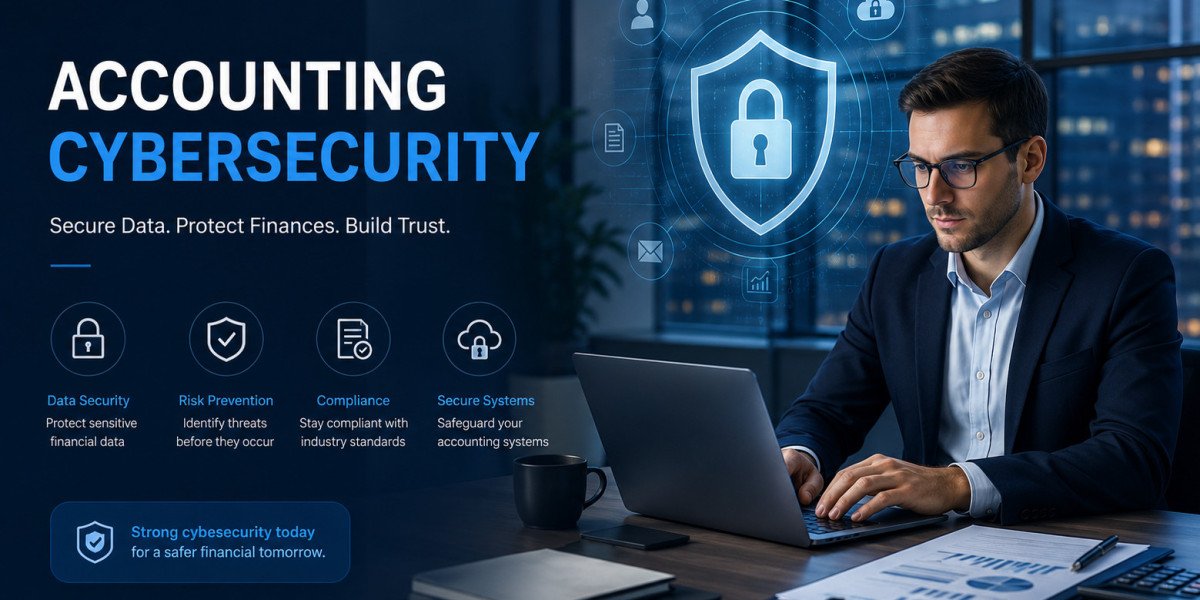

Accounting departments handle some of the most sensitive information within a business. Financial statements, bank account details, payroll records, tax documents, customer information, invoices, payment records, and vendor data all require strong protection. As businesses increasingly move their accounting operations to cloud-based platforms, protecting this information from unauthorized access has become more important than ever.
Data encryption is one of the most effective technologies businesses can use to strengthen accounting cybersecurity. It helps ensure that sensitive financial information remains unreadable to unauthorized individuals, even if the data is intercepted or accessed improperly.
Understanding how encryption works and where it should be used can help businesses create a stronger and more resilient accounting security strategy.
What Is Data Encryption?
Data encryption is a security process that converts readable information, known as plaintext, into an unreadable format called ciphertext.
The encrypted information can only be converted back into readable data using the appropriate decryption method or key.
For accounting teams, encryption can protect financial information while it is being stored and while it moves between systems.
For example, when an accounting employee accesses financial information through a secure connection, encryption helps protect the information as it travels between the employee's device and the accounting platform.
This provides an important layer of protection against unauthorized access.
Why Encryption Matters for Accounting Data
Accounting information is highly valuable to cybercriminals. Stolen financial information can potentially be used for identity theft, payment fraud, business email compromise, or other financial crimes.
Without adequate protection, sensitive information could be exposed if an attacker gains access to a device, network, application, or storage system.
Encryption reduces this risk by making stolen or intercepted information difficult to understand without the required decryption key.
It does not replace other cybersecurity controls, but it provides an important layer of defense.
Encryption Protects Data at Rest
Data at rest refers to information stored on a device, server, database, cloud platform, or backup system.
Accounting records may be stored in:
- Cloud accounting software
- Company databases
- Employee computers
- Cloud storage
- Backup systems
- Payroll platforms
- Financial reporting applications
Encrypting stored information helps reduce the risk of exposing financial records if unauthorized individuals gain access to the underlying storage.
For example, if a laptop containing sensitive accounting files is lost or stolen, encryption can make it much more difficult for someone to access the stored information.
Businesses should therefore evaluate how their accounting software, cloud storage providers, and backup solutions protect stored data.
Encryption Protects Data in Transit
Financial information frequently moves between different systems.
An accounting employee may upload invoices, communicate with a bank, download financial reports, or transfer documents to a tax professional. These activities involve data moving across networks.
Data in transit can be vulnerable if communications are not adequately protected.
Encryption helps protect information while it travels between users, applications, and servers. Secure connections can prevent unauthorized parties from easily reading intercepted information.
This is particularly important for organizations with remote accounting teams or employees accessing financial applications from different locations.
Encryption Supports Cloud Accounting Security
Cloud-based accounting has become increasingly common because it allows businesses to access financial information from virtually anywhere.
However, storing financial data in the cloud does not automatically eliminate cybersecurity risks.
Businesses should understand how their cloud accounting providers protect sensitive information and what security responsibilities remain with the business.
Encryption can help protect financial records stored within cloud environments and information transmitted between users and cloud applications.
Organizations should also use strong authentication and access controls alongside encryption. Encryption is most effective when it forms part of a broader accounting cybersecurity strategy.
Encryption Can Help Protect Payroll Information
Payroll systems contain highly sensitive information, including employee names, compensation details, bank information, tax records, and other personal data.
Unauthorized exposure of payroll information can create serious financial and reputational consequences.
Encrypting payroll data can reduce the risk of sensitive information being exposed if unauthorized individuals gain access to stored files or intercept data during transmission.
Accounting and HR teams should ensure that payroll platforms and file-sharing systems use appropriate security measures when handling employee information.
Encryption Helps Secure Financial Backups
Backups are an important part of financial data protection. They help businesses recover accounting records following accidental deletion, system failure, ransomware incidents, or other disruptions.
However, backups themselves can become a security risk if they are not properly protected.
An attacker who gains access to an unsecured backup could potentially obtain a large amount of financial information.
Encrypting backup data provides an additional layer of protection. Businesses should also restrict access to backup systems and regularly test whether backups can be successfully restored.
Encryption and Access Control Work Together
Encryption should not be viewed as a replacement for access controls.
Businesses still need to determine who can access financial information and what those users are allowed to do.
For example, an accounts payable employee may need access to vendor invoices but may not need permission to change payroll information or banking credentials.
Combining encryption with role-based permissions, multi-factor authentication, strong passwords, and user monitoring creates multiple layers of security.
If one security control fails, another can help reduce the potential impact.
Encryption Can Reduce the Impact of Data Breaches
No cybersecurity strategy can guarantee that a business will never experience a security incident.
However, encryption can reduce the usefulness of stolen data.
If attackers obtain encrypted information without the required keys, the information may be significantly more difficult to interpret and misuse.
This is especially important for businesses that store large volumes of financial records.
Encryption can therefore function as a defensive layer even when other security measures have been bypassed.
Best Practices for Using Encryption in Accounting
Businesses can strengthen their encryption strategy by following several practical measures.
1. Choose Secure Accounting Platforms
Evaluate how accounting software providers protect stored and transmitted information before selecting a platform.
2. Encrypt Sensitive Files
Financial documents stored outside accounting platforms should be protected using appropriate encryption solutions.
3. Secure Backups
Ensure accounting backups are encrypted and access is restricted to authorized personnel.
4. Protect Encryption Keys
Encryption is only as strong as the protection surrounding its keys. Businesses should carefully manage who can access, create, or recover encryption keys.
5. Use Secure Connections
Accounting employees should access financial platforms through secure connections, particularly when working remotely.
6. Combine Encryption With Other Controls
Use encryption alongside MFA, access controls, endpoint security, employee training, monitoring, and regular security assessments.
Common Mistakes Businesses Should Avoid
Some businesses assume that encryption alone provides complete protection. It does not.
Another common mistake is encrypting primary accounting records while leaving exported spreadsheets, email attachments, or backups unprotected.
Businesses should consider the entire financial data lifecycle—from creation and storage to transmission, sharing, backup, and eventual deletion.
It is also important to review security practices regularly. Changes in software, employees, vendors, and business processes can create new security risks.
Final Thoughts
Data encryption plays a critical role in modern accounting cybersecurity. By converting sensitive financial information into an unreadable format, encryption helps protect accounting data from unauthorized access while it is stored and transmitted.
However, effective protection requires more than encryption alone. Businesses should combine encryption with multi-factor authentication, strong access controls, secure backups, employee training, monitoring, and well-defined security policies.
As accounting continues to move toward cloud-based systems and digital workflows, protecting financial information should remain a top priority. A layered cybersecurity strategy that includes strong encryption can help businesses safeguard valuable financial data, reduce exposure to cyber threats, and build greater confidence in their accounting operations.